Bridging the Maternal Health Gap

Maternal healthcare systems worldwide face dual crises: persistent health inequities and high intervention rates alongside alarming levels of patient dissatisfaction. As health systems seek scalable solutions, community-based and clinical doulas offer a cost-effective, non-clinical intervention. Doulas act as crucial bridges in perinatal care, reducing systemic friction, improving clinical metrics, and restoring patient autonomy without expanding clinical liabilities.
Understanding the Role and Scope of Practice: A doula is a trained non-clinical professional who provides continuous physical, emotional, and informational support to individuals before, during, and after childbirth.
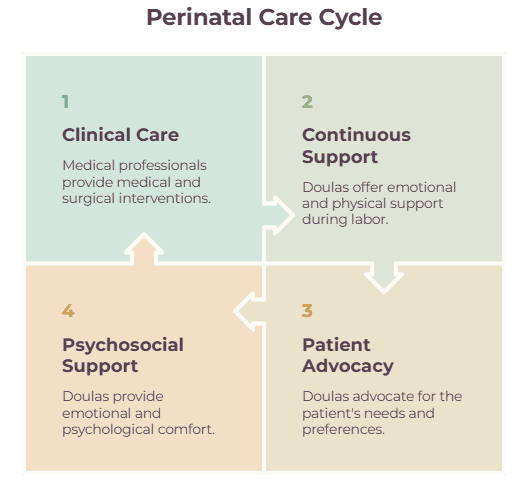
Key Scope Boundaries:
What Doulas Do: Offer continuous bedside presence, non-pharmacological comfort techniques (e.g., positioning, breathing techniques), explain medical procedures in accessible terms, and facilitate communication between patients and clinical staff.
What Doulas Do Not Do: Perform clinical tasks (e.g., cervical exams, fetal monitoring), give medical advice, make decisions on behalf of patients, or alter clinical treatment plans.
Key Operational Domains
1. Respectful Maternity Care (RMC)
Respectful Maternity Care is a fundamental human right encompassing dignity, privacy, and freedom from coercion.
Mechanism: Doulas enhance patient agency and self-efficacy by helping individuals articulate their preferences before entering high-stress clinical environments. During labor, doulas uphold patient dignity by reinforcing informed consent conversations.
Impact for Leadership: Research demonstrates that patients supported by doulas report significantly higher odds of receiving respectful care, particularly among low-income and racially marginalized populations (Mallick et al., 2022). Their presence helps mitigate health disparities linked to implicit bias.
2. Mitigating Obstetric Abuse and Trauma
Obstetric abuse—ranging from non-consensual procedures and harsh communication to physical neglect—remains a systemic driver of birth trauma and postpartum psychological distress.
Mechanism: Doulas serve as an immediate, objective accountability factor within the labor suite. By remaining continuously present, doulas reduce instances of non consented interventions, protect bodily autonomy, and help patients process unexpected clinical shifts in real time.
Impact for Leadership: Incorporating doulas helps healthcare organizations reduce birth trauma claims, lower post-traumatic stress incidence, and address structural drivers of mistreatment in labor units (Sobczak et al., 2023).
3. Collaboration in Clinical Settings with Doctors and Midwives
Misunderstandings regarding the doula's non-clinical scope can occasionally generate inter-professional friction with obstetricians and nursing staff.
Mechanism: Effective integration positions doulas not as opposition to medical staff, but as collaborators who stabilize the birth environment. While clinicians manage medical complexity across multiple patients, the doula provides steady, one-on-one non-medical care.
Impact for Leadership: Clear organizational policies defining the doula scope streamline team dynamics. Studies show that continuous support provided alongside clinical staff leads to reduced labor lengths, decreased epidural reliance, and a substantial reduction in unnecessary primary cesarean births (Sobczak et al., 2023).
4. Emotional and Psychosocial Support
Perinatal anxiety, fear of birth, and lack of social support directly correlate with adverse clinical outcomes, including labor dystocia and postpartum mood disorders.
Mechanism: Doulas deliver continuous physical comfort (e.g., counter-pressure, movement support) and steady psychological reassurance.
Impact for Leadership: Providing targeted psychosocial support mitigates stress-induced birth complications, improves early breastfeeding rates, and decreases emergency department re-admissions during the critical postpartum window (Sobczak et al., 2023).

Strategic Policy Recommendations
Reimbursement & Insurance Integration: Expand public and private health insurance coverage to include certified doula services, targeting structural disparities in maternal outcomes.
Hospital Privileges & Scope Integration: Establish standardized hospital credentialing pathways for birth doulas to ensure clear operational integration within labor and delivery units.
Community-Based Doula Workforce Investment: Allocate state and health system grant funding toward workforce pipelines for community-based doulas to foster culturally concordant care.
References
Mallick, L. M., Thoma, M. E., & Shenassa, E. D. (2022). The role of doulas in respectful care for communities of color and Medicaid recipients. Birth, 49(4), 823–832. https://doi.org/10.1111/birt.12655 Cited by: 91
Sobczak, A., Taylor, L., Solomon, S., Ho, J., Kemper, S., Phillips, B., Jacobson, K., Castellano, C., Ring, A., Castellano, B., & Jacobs, R. J. (2023). The effect of doulas on maternal and birth outcomes: A scoping review. Cureus, 15(5), e39451. https://doi.org/10.7759/cureus.39451 Cited by: 173
